

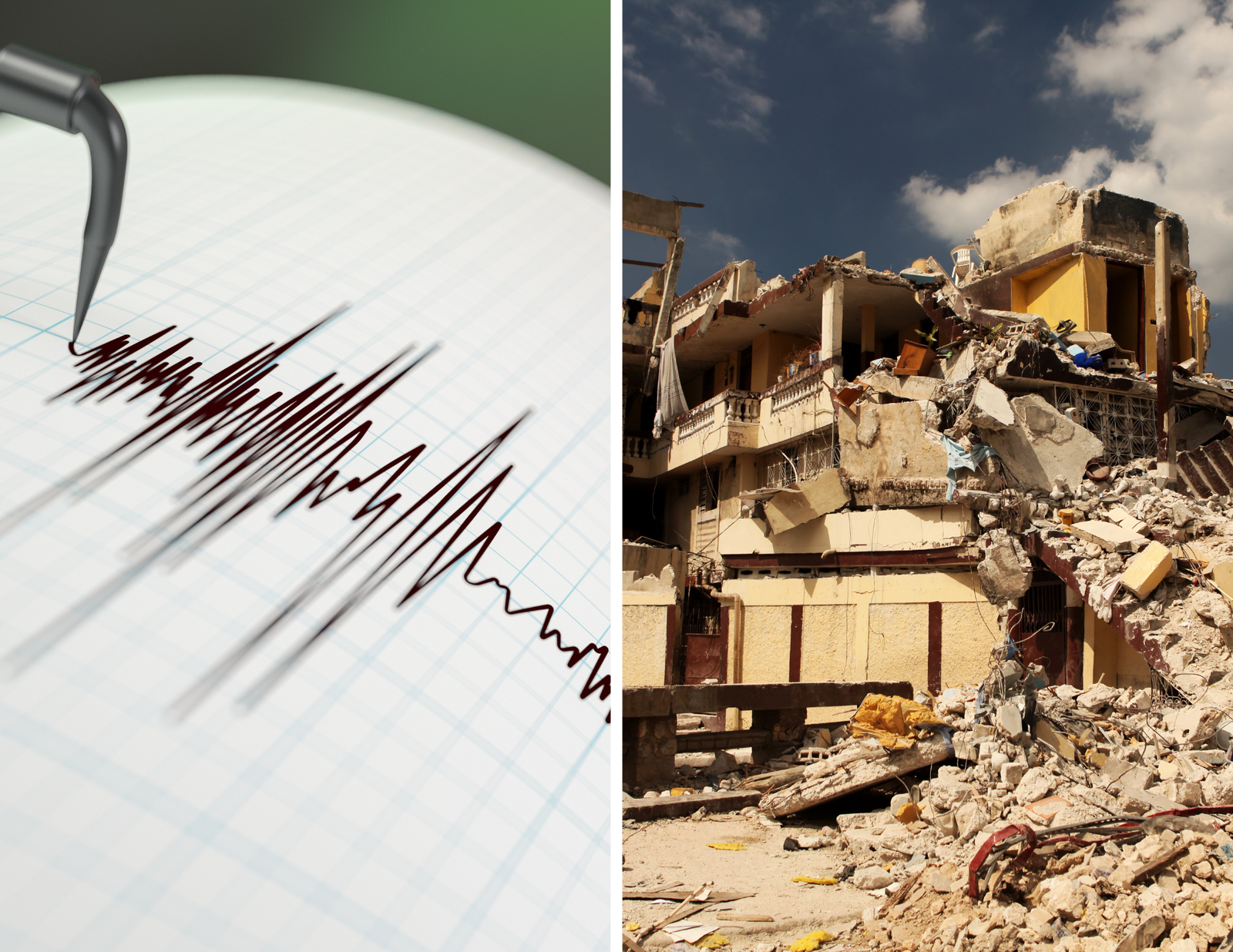
Can Double earthquakes happen again? Predicting exactly when and where might strike again is daunting task for seismologists. Franck Audemard told Science.org, that on June 24 he had just settled down to watch Scotland play Brazil in a World Cup soccer match at his home in Caracas. Then, at 6:04 p.m. local time, the earthquake struck. “I felt two sudden jolts, as if someone was trying to lift me out of bed,” says Audemard, a geologist at the Central University of Venezuela and former member of the Venezuelan Foundation for Seismological Research. He put on his flip-flops and shouted for his family to get out of the house, as the seismic waves shook its walls.
On Wednesday, northern Venezuela was struck by two powerful earthquakes that occurred in rapid succession. The first had a magnitude of 7.2, followed closely by a 7.5 magnitude quake, just 39 seconds and 5 kilometers apart. These tremors resulted in the tragic loss of at least 2,645 lives, with thousands more suffering injuries. The earthquake also caused widespread destruction to buildings throughout the region.
Can you predict an earthquake
Satellite images taken in La Guaira State, the area hardest hit by the double #earthquake that struck #Venezuela on Wednesday, June 24, have revealed the scale of the devastation in the country. As the search for survivors goes on the death toll … pic.twitter.com/8wTi9L7Sn3
— ANTHONYNEWS 🇺🇲 🇨🇱 🇺🇲 🇬🇧 (@AlfidioValera) June 27, 2026
The U.S.Geological Survey States that scientists do not know how to accurately determine the exact date, time and magnitude of a future earthquake. However, seismologists have made a significan strides in understanding and responding to these events.
“Neither the USGS nor any other scientists have ever predicted a major earthquake. We do not know how, and we do not expect to know how any time in the foreseeable future. USGS scientists can only calculate the probability that a significant earthquake will occur (shown on our hazard mapping) in a specific area within a certain number of years”.
An earthquake prediction must define 3 elements: 1) the date and time, 2) the location, and 3) the magnitude.
USGS reports that some people say they can predict earthquakes, but here are the reasons why their statements are false:
Double earthquakes
Double earthquakes, also known as earthquake swarms, are characterized by two or more seismic events occurring in close succession, like what happened in Venezuela on June 26. These can happen due to the release of stress along a fault line, often triggered by tectonic shifts. Venezuela, located near the boundary between the Caribbean and South American plates, is particularly susceptible to such seismic activities.
Predicting Future Earthquakes
Predicting exactly when and where a double earthquake might strike again is daunting task for seismologists. Earthquake prediction remains in inexact science, relying on the monitoring of seismic activity and historical patterns. However, certain regions in Venezuela are more prone to seismic activity due to their proximity to active fault lines.
Key Areas to Watch
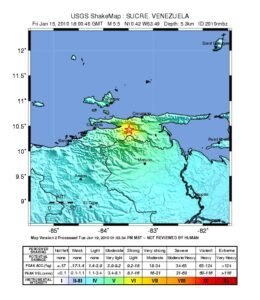 Image Source: Wikipedia
January 2010 Venezuela earthquake intensity USGS
The El Pilar Fault: This fault runs parallel to the northern coast of Venezuela and is one of the most active in the country. It has the potential to generate significant seismic events.
The Bocono Fault: Located in the Andes, this fault has historically been a source of considerable seismic activity.
The San Sebastian Fault: Another critical fault line that requires constant monitoring, as it has the potential to produce impactful earthquakes.
Preparing for the Future
While predicting the exact timing and location of future earthquakes remains challenging, preparation is crucial. Here are some steps that can be taken to mitigate the impact of future seismic events:
Strengthening Infrastructures: Ensuring that buildings and infrastructure are built or retrofitted to withstand seismic forces can reduce damage and save lives.
Community Education: Education communities about earthquake preparedness, including evacuation plans and emergency kits, can improve resilience.
Early Warning Systems: Investing in technology to detect early signs of seismic activity can provide precious moments to take cover and evacuate if necessary.
Image Source
- January 2010 Venezuela_earthquake_intensity_USGS: Wikipedia
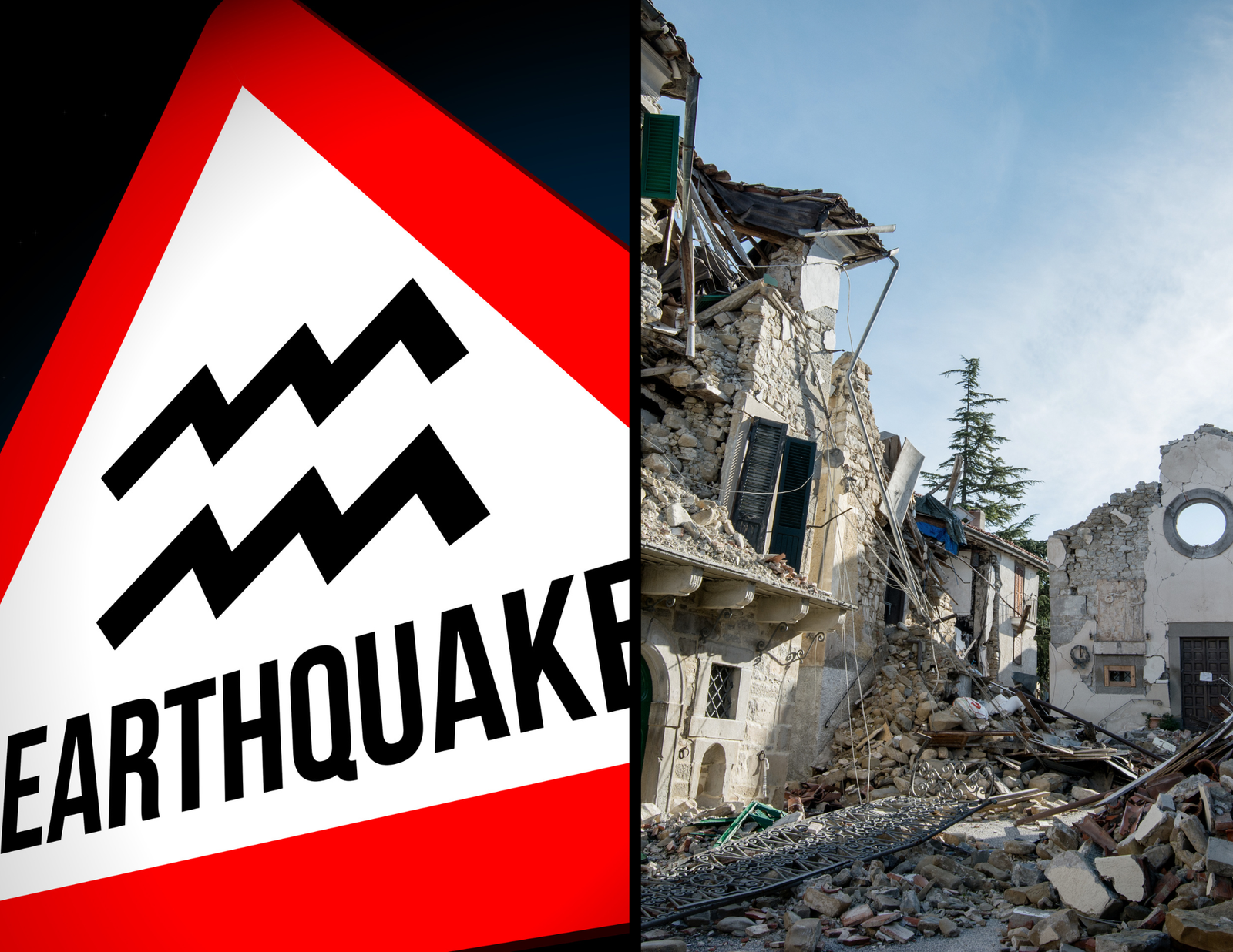
- Earthquake: Canva












Leave a Reply