

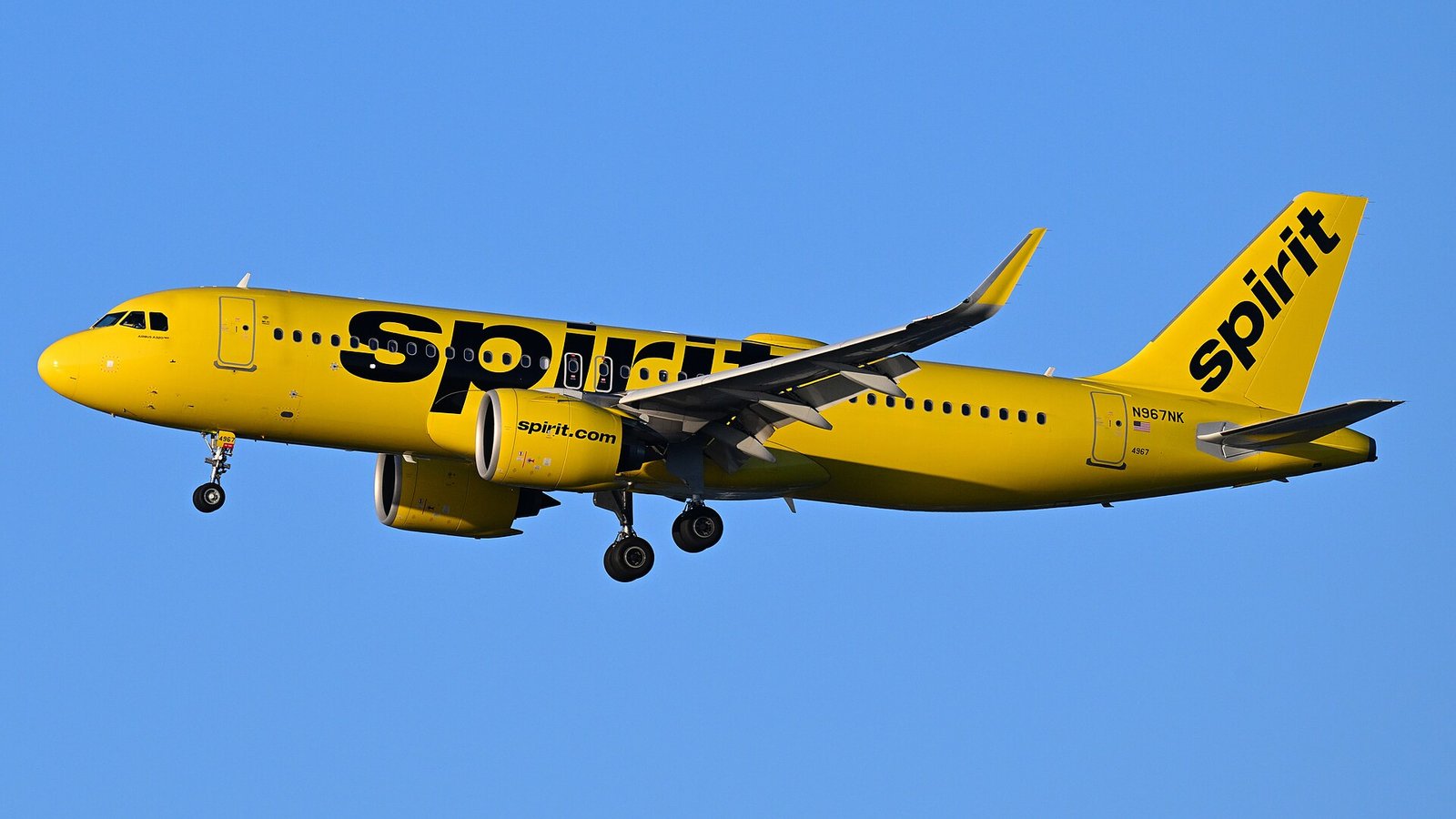
Spirit Airlines, the Florida-based budget carrier known for its bright yellow planes and ultra-low-cost fares, has officially gone out of business. “We regret to inform you that Spirit Airlines has ceased global operations,” read the sign in Terminal A, on May 2nd, where Spirit operated in New York City for years. “All Spirit flights have been cancelled, and customer service is no longer available.”
The airline’s closure marks the end of an era for one of the most recognizable names in the U.S. low-cost travel market.
Impact on Passengers and Employees
The shutdown has left thousands of passengers stranded and tens of thousands of employees without jobs. Spirit has announced that customers with existing bookings will be eligible for refunds, though the process may take time as the company works through bankruptcy proceedings.
Airports that relied heavily on Spirit’s operations, particularly in cities like Fort Lauderdale, Orlando, and Las Vegas, are now facing reduced flight options and potential fare increases as competitors adjust to fill the gap.
How to get a Refund?
Southwest to the Rescue
Southwest said Saturday it would offer special fares for Spirit customers on eligible routes through Wednesday, May 6. Flights will cost $200 for travel up to 500 miles, $300 for up to 1,000 miles and $400 for longer flights.
To access the special fares, Spirit customers need to go to a Southwest ticket counter at their departure airport.
The U.S. Department of Transportation advises travelers affected by airline shutdowns to contact other carriers to determine whether they will honor existing tickets, either on a confirmed or standby basis, or provide discounted fares by waiving advance purchase rules and other restrictions.
Embed from Getty Images
Travel expert Katy Nastro of Going.com described these offers as “rescue fares,” noting that availability may be limited and urging passengers to rebook with participating airlines as soon as possible.
Spirit Airlines pilot given emotional send-off from rival airline
There is still good left in humanity.
Captain Jon Jackson was supposed to take his final retirement flight with Spirit Airlines today. But after Spirit's shutdown, he instead found himself as a passenger on a Southwest Airlines flight into Baltimore.
What happened next was… pic.twitter.com/QIx9Sq4YgX
— Turbine Traveller (@Turbinetraveler) May 3, 2026
A Spirit Airlines pilot received an unexpected hero’s farewell with the help of a competing carrier — and his first officer son — after his planned retirement flight was canceled when the airline abruptly shut down.
Captain Jon Jackson had been scheduled to operate his final Spirit flight into Baltimore-Washington International Airport on Saturday. However, the ultra-low-cost airline ceased operations overnight, leaving him unable to complete his farewell journey.
Stranded by the sudden closure, Jackson caught a ride with Southwest Airlines out of Fort Lauderdale, where he was joined in the cockpit by his son, Chris, a first officer for the airline, according to CNBC.
The Rise of a Budget Airline
Founded in 1983, Spirit Airlines began as a small charter operation before transforming into a major player in the low-cost airline industry. Its business model focused on offering rock-bottom base fares while charging extra for nearly every add-on, from seat selection to carry-on bags. This approach attracted millions of travelers seeking affordable flights across the United States, the Caribbean, and Latin America.
For years, Spirit’s strategy proved successful. The airline expanded rapidly, becoming a favorite among budget-conscious passengers and a fierce competitor to larger carriers. However, the same model that fueled its growth eventually contributed to its downfall.
Mounting Financial Pressure
Spirit’s financial troubles began to intensify in the early 2020s. Rising fuel prices, increased labor costs, and growing competition from other low-cost airlines eroded its profit margins. The airline also faced criticism for frequent delays, cancellations, and customer service issues, which damaged its reputation and customer loyalty.
A proposed merger with JetBlue Airways, which could have provided financial stability and expanded market reach, was blocked by federal regulators in 2024 over antitrust concerns. Without the merger, Spirit was left to face mounting debt and declining revenue on its own.
By early 2026, the airline’s financial position had become unsustainable. Despite efforts to restructure and cut costs, Spirit was unable to recover, leading to the decision to cease operations entirely.
Industry Reactions
The airline industry has reacted with a mix of surprise and concern. Analysts warn that Spirit’s exit could lead to higher airfares on routes where it once provided low-cost competition. Other budget carriers, such as Frontier and Allegiant, may attempt to capture Spirit’s former market share, but none are expected to fully replace its extensive network.
Aviation experts also view Spirit’s collapse as a cautionary tale about the challenges of sustaining an ultra-low-cost model in a volatile market. The combination of economic uncertainty, regulatory hurdles, and shifting consumer expectations has made it increasingly difficult for airlines to survive on razor-thin margins.
The End of an Era
Embed from Getty Images
Spirit Airlines’ closure marks the end of more than four decades of operation. Once celebrated for democratizing air travel and making flying accessible to millions, the airline’s downfall underscores the fragility of the low-cost carrier model in today’s competitive aviation landscape.
As Spirit’s yellow planes disappear from the skies, the airline leaves behind a complex legacy—one of innovation, controversy, and a relentless pursuit of affordable travel that changed the way Americans fly.
Así se vio el último vuelo de la aerolínea Estadounidense de bajo costo Spirit Airlines. Sus últimas 6 horas luego de casi 34 años de operaciones. Cesó sus operaciones por problemas financieros. pic.twitter.com/ZkjeUzao7x
— 𝘼𝙧𝙧𝙚𝙘𝙝𝙤 (@Arr3ch0) May 2, 2026
Image Source
- Spirit Airlines: Wikipedia















Leave a Reply