

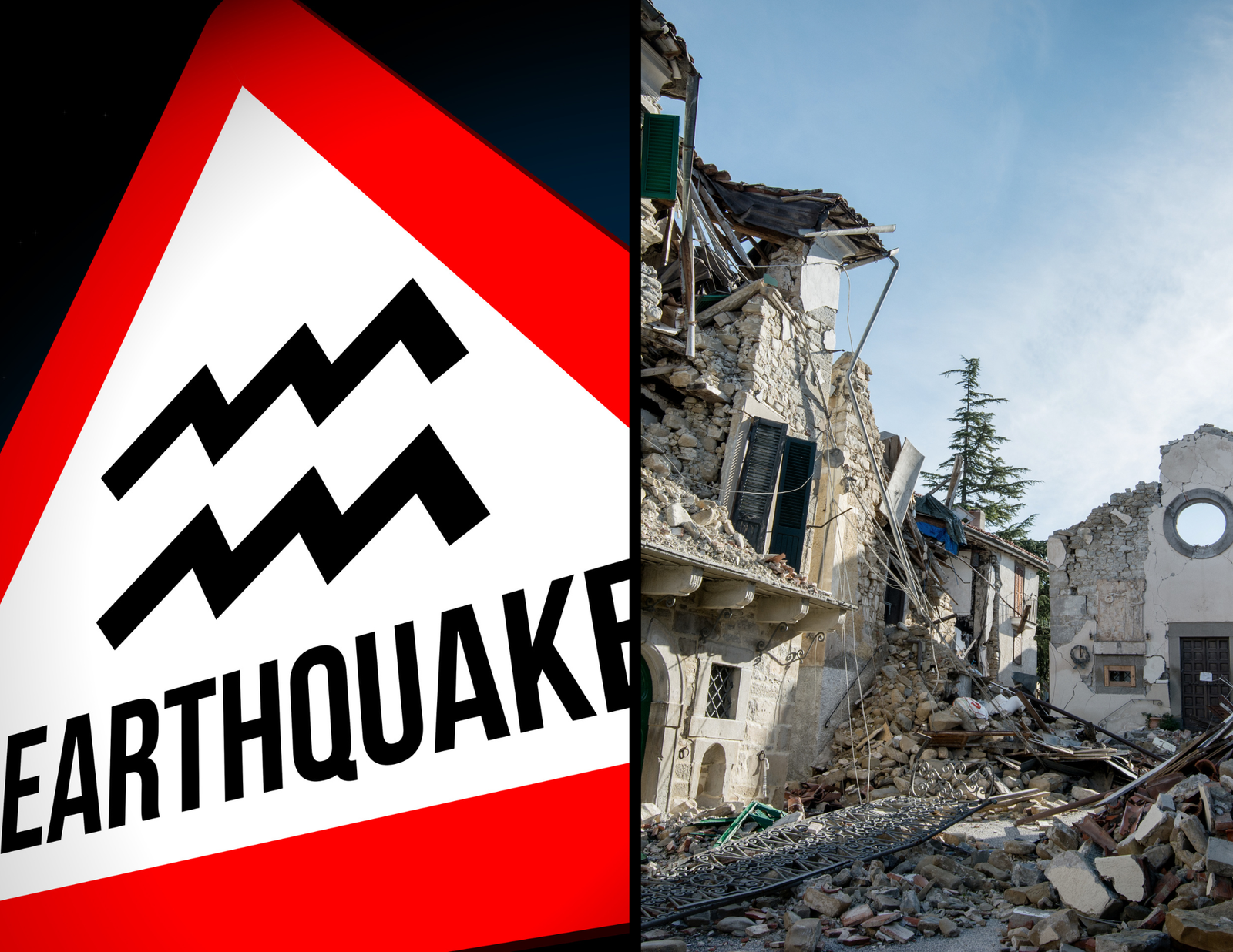
In less than two months, Venezuela and Colombia experienced earthquakes that shook not only buildings and roads, but also the peach of mind of millions of families. Although both events were of great magnitude, the difference lay in how they occurred, where they hit, and the level of destruction they left behind.
Venezuela: The Double Earthquake on June 24
On June 24, 2026, Venezuela faced a sequence of two earthquakes almos back-to-back: one of magnitude 7.2 and another of 7.5, separated by just 39 seconds. The epicenter was in the north-central part of the country, near Morón, and the movement was shallow – approximately 10 kilometers deep – a condition that tends to increase the violence with which it’s felt at the surface.
The impact was especially hard near Caracas, Maracay, Carabobo, and the central coast, where the collapse of homes, buildings, and roads turned the earthquake into a large-scale humanitarian emergency. The earthquakes also triggered landslides in vulnerable areas, complicating the arrival of aid. The toll was devastating: more than 6,500 lost their lives.
Colombia: The August 10 Earthquake
Colombia’s earthquake on August 10, 2026 was magnitude 7.4 and had its greatest impact in the western part of the country, with the epicenter near San José del Palmar, in Chocó. Although it was comparable in strength to Venezuela’s main earthquake, it originated about 110 kilometers deep. That depth reduced some of the direct shaking at the epicenter, but didn’t prevent serious damage in several cities and communities.
Its effects were felt in areas connected by mountain corridors between Cali, Pereira, and the Colombian Pacific. Initial reports indicated more than 100 deaths, damaged buildings, and people trapped under rubble. The mountains limited roads, and remote communities made the emergency complex.
What’s happening underneath (geologically) Venezuela and Colombia?
🇨🇴 Terremoto en Colombia | San José del Palmar, departamento del Chocó. 🇨🇴
Luego del doblete sísmico M7.2 y M7.5 de Venezuela, el sismo M7.4 de Colombia ¿es posible que tengamos un próximo terremoto en Ecuador? 🇪🇨
¡Esto y más vía @ActualidadRT @RTultimahora! 🚨 pic.twitter.com/uhnhpEVXSa
— Divulgación Científica (@Sargox) August 10, 2026
The earthquakes were shaped by different tectonic forces beneath each country.
Venezuela sits along the boundary between the Caribbean Plate and the South American Plate. In northern Venezuela, these plates mostly grind sideways past one another along major fault systems, including the Boconó -San Sebastián – El Pilar system. This type of movement can produce shallow earthquakes, which are often felt more violently at the surface because the rupture is closer to town and cities.
Total devastation in Venezuela following a powerful earthquake. Up to 100,000 people are feared dead.
Pray for them, they didn’t deserve this. pic.twitter.com/heMpFeO9Y4
— Dr. Maalouf (@realMaalouf) June 25, 2026
Colombia sits in a more crowded tectonic crossroads. Beneath its Pacific side, the Nazca Plate is being forced underneath the South American Plate – a process called subduction. Colombia is also affected by the Caribbean Plate in the north. These plate interactions help build the Andes, feed volcanic activity, and create earthquakes at shallow , intermediate, and deep depths.
Terrifying video: University Hospital collapses in Colombia 🇨🇴 after massive 7.4 earthquake pic.twitter.com/B48ZrqPrq5
— TaraBull (@TaraBull) August 10, 2026
The main difference. Venezuela’s strongest earthquake risk is often linked to plates sliding sideways along faults, while Colombia faces a more complex mix of faulting an done plate driving beneath another. That is why Colombia can experience deeper earthquakes, while shallow Venezuelan earthquakes can deliver especially intense shaking close to the surface.
Image Source
- Two earthquakes: Venezuela and Colombia face the force of the earth: Canva














Leave a Reply