

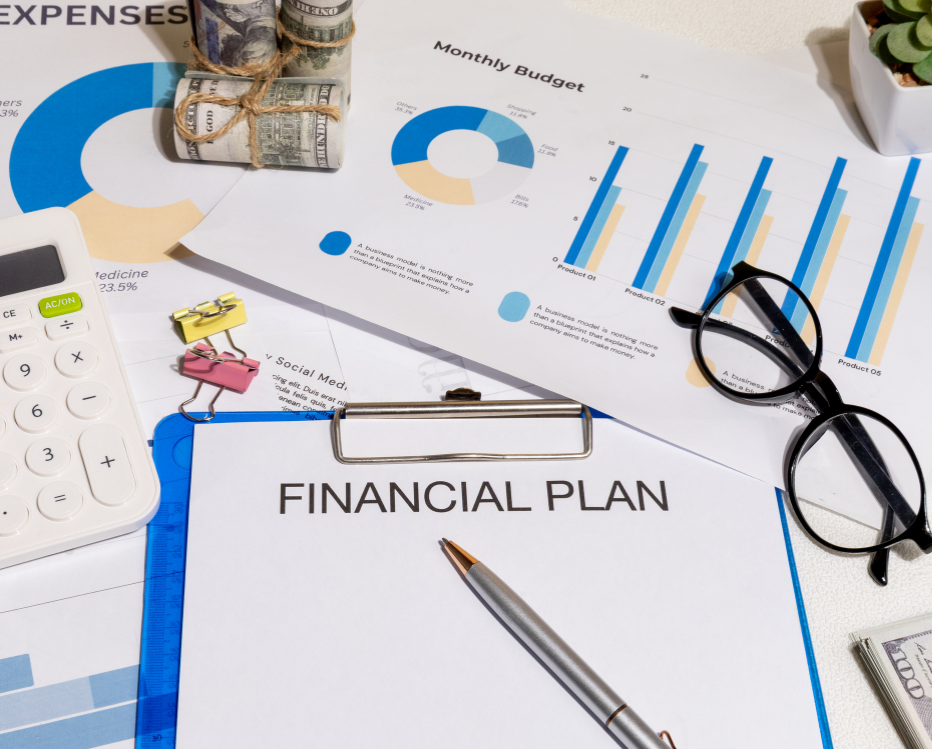
A budget gives your money a plan. When you know what is coming in and where it needs to go, you can spend with less stress and make steady progress toward your goals.
Introduction
Creating a monthly budget does not mean saying no to everything you enjoy. It means deciding in advance how to use your income so your essentials are covered, your priorities move forward, and your everyday spending feels more intentional.
The process is simpler than it may seem: add up your income, list your expenses, set realistic limits, and check in as the month unfolds. The steps below will help you build a budget you can actually use – not one that looks perfect on paper but is impossible to follow.
1. Calculate Your Monthly Income
Start with the money you expect to receive during the month. Use your take-home pay – the amount that reaches your account after taxes and other deductions – not your gross salary.
1. Write down each paycheck and its expected date.
2. Add reliable income from other sources, such as freelance work, benefits, or regular support.
3. For irregular income, estimate conservatively using a lower typical month.
4. Add the amounts together to find your monthly income total.
If you are paid weekly or every two weeks, some months may include an extra paycheck. Treat that money as a bonus for savings, debt, or a future irregular expense rather than depending on it for regular bills.
Helpful tip: Keep a separate note of when each payment arrives. A budget can balance on paper and still feel tight if bills are due before your next paycheck.
2. List Fixed and Variable Expenses
Next, write down everything you plan to pay for during a month. Looking at bank statements, receipts, or payment history can help you remember smaller expenses.
- Fixed expenses stay mostly the same each month, such as rent, a mortgage, insurance, subscriptions, and minimum debt payments.
- Variable expenses change from month to month, such as groceries, transportation, dining out, entertainment, clothing, and household purchases.
- Irregular expenses happen less often, such as gifts, annual fees, car repairs, or medical costs. Estimate a monthly amount so they do not surprise you.
Separate needs from wants, but do not treat every want as a mistake. A realistic budget can include fun, convenience, and personal spending while still protecting your essentials.
Actionable tip: If an expense is hard to predict, review the las three months and use the average. If that is not possible, choose a modest estimate and adjust it after tracking your actual spending.
3. Set Savings and Debt Priorities
Give your future self a place in the budget before all of your income is assigned to day-to-day spending. Start with priorities that protect your stability and reduce expensive debt.
1. Cover the basics first. Plan for housing, utilities, food, transportation, insurance, and required payments.
2. Build a starter emergency fund. Choose an amount you can save consistently, even if it is small.
3. Pay more than the minimum when possible. Direct extra money toward one debt while continuing minimum payments on others.
4. Save for known future costs. Set aside monthly amounts for annual bills, repairs, travel, education, or other planned goals.
If you have several goals, rank them instead of trying to fund everything equally. A clear order makes it easier to decide where extra money should go.
Keep it encouraging: Saving $25 consistently is more useful than planning to save and abandoning the budget after one difficult month.
4. Choose Realistic Spending Limits
Turn your expense list into limits you can live with. A spending limit should guide your choices, not make ordinary life feel like a punishment.
- Use your real habits. Base limits on what you actually spend, then make gradual changes instead of choosing numbers that are far too low.
- Protect flexibility. Leve room for price changes, spontaneous plans, and small unexpected costs.
- Choose trade-off. If you want to increase savings, decide which category can reasonably decrease and by how much.
- Give yourself personal spending money. A modest guilt-free amount can make the rest of the plan easier to follow.
After setting your limits, compare the total with your income. If expenses are higher, adjust one category at a time. Start with subscriptions, convenience spending, or flexible wants before cutting essentials.
Reality check: A budget that works for most months is better than a perfect budget that only works for one week.
Build the Budget
Now assign each dollar of expected income to a purpose. You can use a spreadsheet, a budgeting app, or a simple notebook.
1. Write your income total at the top.
2. Add essential fixed expenses and their due dates.
3. Add variable spending limits for groceries, transportation, and lifestyle costs.
4. Add savings and extra debt payments as planned outflows.
5. Assign the remaining amount to a buffer or another priority until income minus planned expenses equals zero.
Here is a simple example for a month with $4,000 of take-home income:
Category Monthly amount Type
Rent “$1,400” Fixed expense
“Utilities, phone,
and internet” $320 Fixed expense
Insurance $180 Fixed expense
Minimum debt payment $200 Fixed expense
Groceries $450 Variable expense
Transportation $180 Variable expense
Dining out and fun $200 Variable expense
Personal and household $150 Variable expense
Emergency savings $400 Savings
Retirement savings $200 Savings
Extra debt payment $200 Debt priority
Monthly buffer $120 Flexibility
Total planned “$4,000” Balanced
6. Track Spending During the Month
Creating the budget is only the beginning. Tracking helps you see whether your plan matches real life, while there is still time to make adjustments.
Record purchases promptly. Add each expense to your choses took, even if it is small.
Check your accounts regularly. Compare your records with your bank and card balances every few days.
Watch category totals. Notice when groceries, dining, or another flexible category is getting close to its limit.
Pause before overspending. Ask whether you can delay the purchase, choose a lower-cost option, or move money from another flexible category.
Use your buffer intentionally. A planned buffer is there for surprises; it is not evidence that the budget failed.
Try a short weekly check-in rather than waiting until the end of the month. Ten minutes can help you catch a problem early and keep a small adjustment from becoming a major shortfall.
Make it easy: Track spending in the same place every time. The best method is the one you will use consistently.
7. Review and Adjust at Month-End
An the end of the month, compare your plan with what actually happened. The goal is to learn, not to judge yourself.
1. Compare planned and actual amounts for each category.
2. Look for patterns. Identify categories that were consistently higher or lower than expected.
3. Update the next month’s limits using what you learned about prices, timing, and your habits.
4. Celebrate progress. Notice debt reduced, savings added, bills paid on time, or choices that matched your priorities.
If you overspent, adjust the plan rather than abandoning it. You may need a higher limit in one category, a lower limit in another, or a new monthly amount for an irregular expense.
Remember: A monthly budget is a flexible plan. Each review makes the next version more accurate and more useful.
Conclusion
A workable budget connects your income to your real priorities. Start with the essentials, make room for savings and debt progress, choose limits that fit your life, and check in often enough to stay aware.
Start today by using your next month’s income as the foundation. Write down what is coming in, give every dollar a job, a make one small improvement your can repeat.
Image Source
- How to Create a Monthly Budget: Canva















Leave a Reply