

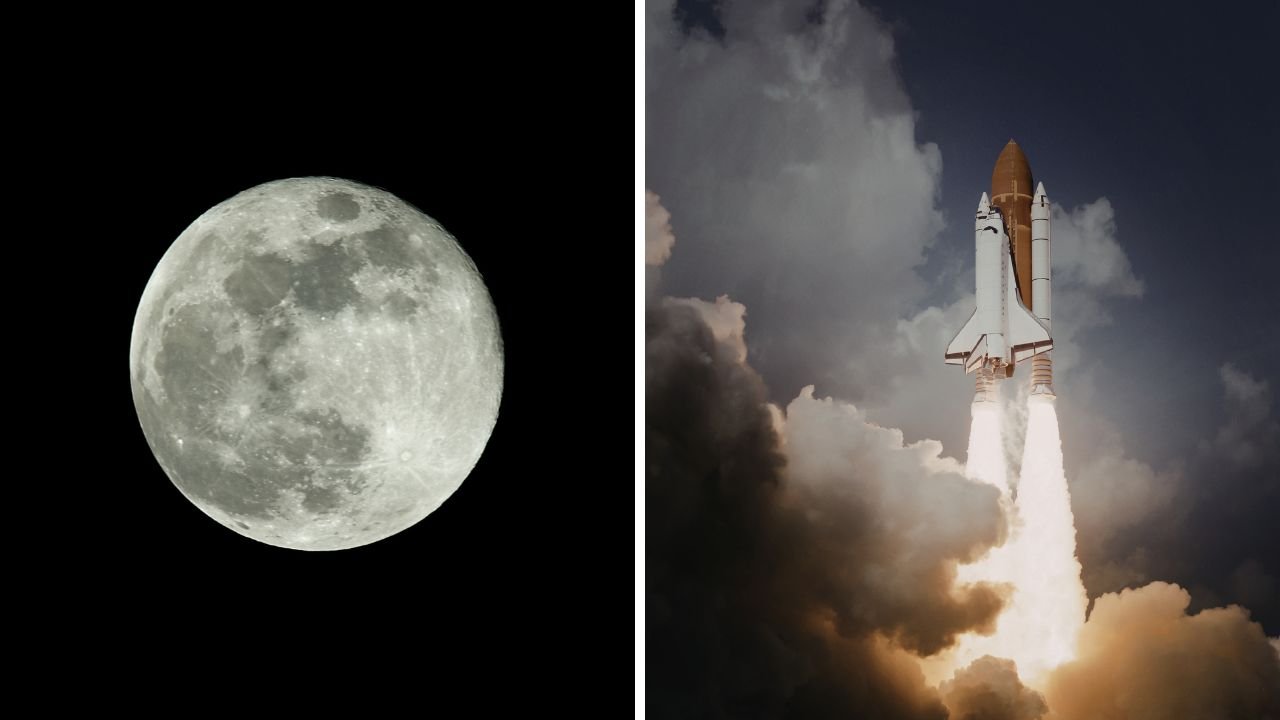
The Artemis program marks humanity’s return to the Moon after more than five decades. Led by NASA, this ambitious initiative aims not only to land astronauts on the lunar surface but also to establish a sustainable presence that will serve as a foundation for future missions to Mars and beyond. The Artemis landing represents a pivotal moment in space exploration, combining international collaboration, cutting-edge technology, and a renewed spirit of discovery.
The Vision of Artemis
Named after the Greek goddess of the Moon and twin sister of Apollo, Artemis symbolizes both continuity and progress. While the Apollo missions of the 1960s and 1970s demonstrated that humans could reach the Moon, Artemis seeks to prove that humanity can live and work there. The program’s goals include landing the first woman and the first person of color on the lunar surface, advancing scientific research, and developing technologies for deep space exploration.
The Journey to the Moon
It’s not a straight shot to the far side of the Moon! 🌕
Over approximately 10 days, the Artemis II astronauts will orbit Earth twice before looping around the far side of the Moon in a figure eight and returning home. pic.twitter.com/udjejhxgVx
— NASA (@NASA) April 2, 2026
The Artemis mission architecture involves several key components:
Space Launch System (SLS): NASA’s most powerful rocket, designed to carry astronauts and heavy cargo beyond Earth’s orbit.
Orion Spacecraft: A crew capsule built to transport astronauts safely to lunar orbit and back.
Gateway: A small space station orbiting the Moon that will serve as a staging point for lunar landings and future missions.
Human Landing System (HLS): A lunar lander developed in partnership with commercial companies to transport astronauts from lunar orbit to the surface.
The Artemis I mission, an uncrewed test flight, successfully demonstrated the performance of SLS and Orion. Artemis II will carry astronauts around the Moon, and Artemis III will achieve the first crewed lunar landing of the program.
The Lunar Landing
#AHORA Esta es la vista de la tripulación del Artemis II esta mañana desde 41.756 millas (67.200 km) de altura.
Ningún ser humano ha visto una Tierra en fase creciente completa desde 1972. pic.twitter.com/vJCsH5MwgI
— Andrews Abreu (@AndrewsAbreu) April 2, 2026
The Artemis III mission will target the lunar South Pole, a region of immense scientific interest. Unlike the equatorial sites visited during Apollo, the South Pole contains permanently shadowed craters that may hold water ice. This resource could be vital for producing oxygen, drinking water, and rocket fuel, enabling long-term lunar habitation.
Astronauts will conduct surface operations lasting several days, performing experiments, collecting samples, and testing new technologies such as advanced spacesuits and rovers. The mission will also demonstrate the use of sustainable power systems and communication networks designed for future lunar bases.
International and Commercial Collaboration
¡Despegue! La misión Artemis II se lanzó desde @NASAKennedy a las 6:35 pm EDT (22:35 UTC), llevando a cuatro astronautas en un viaje alrededor de la Luna. Artemis II allanará el camino para futuros alunizajes, así como para el próximo gran salto: llevar astronautas a Marte. pic.twitter.com/rNlz2ycXAf
— NASA en español (@NASA_es) April 1, 2026
Artemis is a global effort involving partnerships with space agencies and private companies. The European Space Agency contributes to the Orion service module, while countries such as Japan and Canada provide components for the Gateway. Commercial partners are developing landers, habitats, and logistics systems, reflecting a new model of cooperation between government and industry.
The Future Beyond Artemis
Sabían que debido a la microgravedad, los astronautas del Artemis II crecerán 2 cm y regresarán a la Tierra con 20 días menos de edad pic.twitter.com/pZeeTWnzhu
— KPININI (@kpininimemes) April 1, 2026
The Artemis program is more than a return to the Moon—it is a stepping stone toward Mars. Lessons learned from lunar missions will inform the design of life-support systems, habitats, and propulsion technologies for deep space travel. By establishing a sustainable lunar presence, humanity takes a crucial step toward becoming a multi-planetary species.
The Artemis lunar landing represents a defining chapter in human history. It rekindles the spirit of exploration that once carried astronauts to the Moon and extends it into a new era of innovation and inclusivity. As the Artemis missions unfold, they will not only expand scientific knowledge but also inspire generations to look upward and imagine what lies beyond.
Image Source
- Moon: Canva














Leave a Reply